
Unicast vs. Anycast
To best understand the benefits of WEDOS.global, compare the traditional Unicast solutions to an Anycast system.
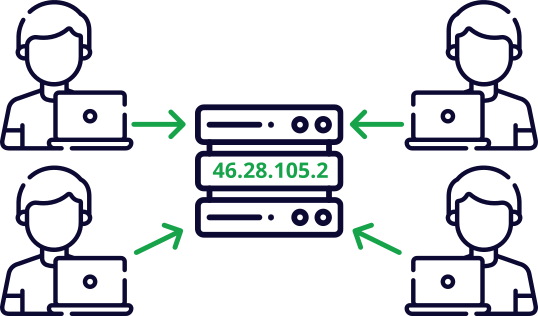
- Unicast represents the traditional way of assigning IP addresses to servers: requests sent to a specific address are routed to a specific computer, much like delivering a letter via mail to a specific house.
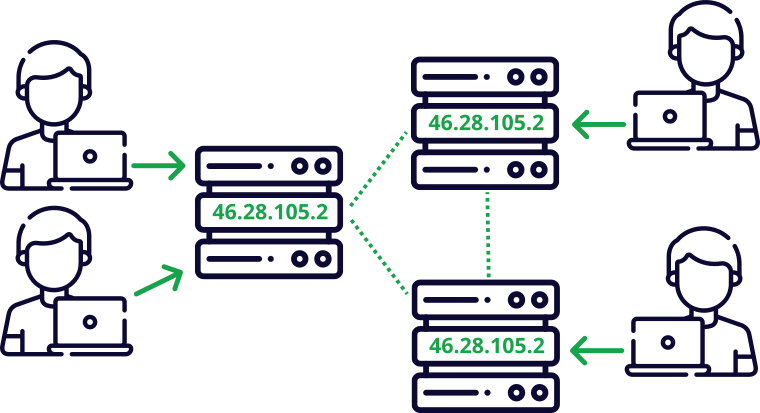
- Anycast technology allows multiple servers to correspond to a single IP address. Imagine them as the post itself: a posted letter is first sent to one of many offices, each of which operates the same way, and can even cover for another if it becomes unavailable.
Use Cases
The above analogy with postal services illustrates common use cases for Unicast and Anycast systems.
Unicast: Simple Service
Most Internet services prefer unicast solutions for their simplicity and predictable performance. When you post a letter to a specific person, you expect a response from that very person, and that is exactly what Unicast is meant to do.
The key features are:
- Simplicity. Having a single server respond to a single IP is easy to debug and configure.
- Traffic Control. You know exactly where traffic is directed, which makes it easy to monitor.
- Cost-effectiveness. A Unicast system consists of a single server and fairly simple networking infrastructure.
Anycast: Robust Delivery Network
Anycast solutions are complex and costly. Large systems, such as WEDOS.global, span continents, even the entire world, concentrating powerful servers in areas with high volume of traffic. While they aren’t ideal for running simple services such as web hosting, they excel as proxies between clients and target web servers, providing the following benefits:
- Low Latency. The farther the target physical server is, the longer it takes the signal to get there. Anycast solves this by placing servers in strategic locations, so that wherever a client is, they always have a server near them.
- Content Delivery. Thanks to its availability, an Anycast system is ideal at delivering static content (websites that don’t change frequently, images and other media). This can range from cached web pages to files which need to be readily available, such as web fonts and other resources.
- DDoS Attack Mitigation. DDoS attacks rely on gathering an enormous volume of traffic from all over the world. Anycast makes it virtually impossible to attack a single server, as load-balancing network mechanisms direct the traffic elsewhere.
- Up to 100% Uptime. Thanks to its inherent redundancy, if a server from an Anycast system does go down because of an attack, or even maintenance, others automatically take its place.
A Combination Thereof
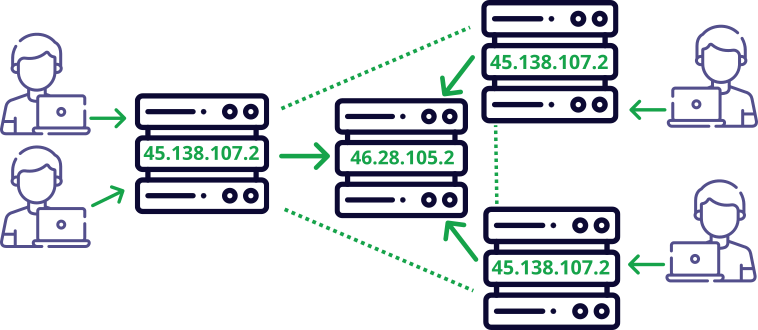
Finally, Unicast and Anycast systems aren’t mutually exclusive. If you imagine, that sending a request to a Unicast server is like delivering a letter yourself, whereas adding Anycast is the same as sending that same letter via post – from finding the mailbox nearest to you, up to having your message posted to the other end of the globe with no additional effort on your part – you can easily spot the benefits and drawbacks of adding an Anycast network between your Unicast web server and its users.
The benefits specific to WEDOS.global (other Anycast networks may work differently) are:
- Less server load. Servers behind our Anycast network receive far less traffic, thanks to traffic filtering and static content caching. The network acts as a secretary who sorts out junk mail and sends common replies on your behalf, so you are free to deal with issues that actually matter.
- Faster response times. The system serves frequently accessed static content directly from Anycast, while the actual web server typically has more free resources to generate dynamic webpages faster. It’s as if people were able to pick up pamphlets outside your office, and would only come to you personally with unique requests.
- Proactive security. As a dedicated security system, the network constantly learns about security threats encountered by any of its members, as well as receiving frequent global updates.
The most obvious drawback of Anycast is the cost. The post office has to maintain the mailboxes, offices, staff and everything else needed to deliver letters efficiently, and this is reflected in the postage you have to pay for their services. Still, if you compare postage to the expenses and effort it would take you to deliver every letter by hand, from a certain volume of letters, the post will come out ahead.
WEDOS.global is an Anycast network used worldwide to deliver content and protect Unicast web servers. We’ve done all the hard work already, so you can easily join and benefit from a robust, constantly evolving system.